One way in which the observer uses media language to create meaning is through use of colours. The homepage is made up of rich burgundy's and royal blues which connotes importance because these colours are often associated with a sense of seriousness. These shows readers of the observer that the Observer takes it's news seriously and genuinely.
Additionally the structure of the homepage also reflects this. It has a linear structure which is neatly organised and sectioned, with the more important/ main articles made bigger than the others. This would help readers to navigate around the homepage and also suggests that the Observer is organised and knows what they are talking about.
Saturday, 1 December 2018

Thursday, 29 November 2018
newspapers Q9
‘The representations featured in the online
observer reflect its values and beliefs.’ Discuss how far you agree with this statement?
The observer and the guardian
are known for being supportive of the left side of the political scale and
therefore many of their articles are likely to support the social liberals. We
can see they take politics very seriously through the amount of articles they
have on their homepage about it. This shows they have a ‘hard news’ priority.
For example, the top story – represented by it being the biggest on the screen –
is about Theresa May and Brexit.
We can also see another one of
the observer’s values and beliefs through the featured articles. The Observer
intends to reflect today’s modernity and diversity through the news regarding
international relations. It mentions ‘Mrs Obama’ as well as ‘us immigration’
and ‘Saudi dissidents’ on their homepage. This shows they have intentions of
mentioning countries other than England and even countries outside of Europe –
not insular but inclusive.
Additionally, they show, not
only their interest in diversity of other countries but also the way they value
ethnicity as well as age by references. For example, on the homepage they have
an article dedicated to ‘Jamal Khashoggi’ which represents reflection of
ethnical diversity. They also mention the health of children through a 'salt' in food article which shows they not only worry about the future of the country within politics, but the future of health as well. This reflects their values and beliefs.
Through use of diversity in
many areas as well as a lot of emphasis on political topics such as Brexit, I
agree that the online observer reflects its values and beliefs through its features.
Thursday, 15 March 2018
EXAM Q4


On the cover of this MOJO magazine, the main splash of the musician is the boldest, eye-capturing image on the whole cover. His head covers the head-mast because we already are familiar with the brand MOJO, and it is clearly evident what it says. However, it is significant that this artist's head covers the word, because that is how we know he is the most important thing on the cover, and so, the biggest musician featured within the magazine. To support this idea, his name is the next biggest word featured, other than the mast-head. This way, we know even more about the face on the cover and how 'Ray Davies' is the biggest topic.
Sidelining his face are the other smaller topics of the magazine. The fact that they are not to one side of him, or going across him, but that they are circling his face, shows that, even with all these extra stories, he is the main feature.
The magazine also colour-coordinates around the musician. The main colour features are black, white and red. This gives the impression that the magazine is sophisticated. The main-splash supports this by not staring directly at the reader - instead he is staring into the distance which creates an enhanced allusion of sophistication. The yellow adds contrast to the cover by being a slightly more fun colour and representing the more exciting parts of the magazine.
Thursday, 8 March 2018
EMMERDALE

This picture promises the audience emotions as well as what could be a strong bond between a couple, mother and daughter, friends or even sisters.

This picture shows that there will be different age-groups involved within the show, which means there will be range of situations and will cover a larger viewing age-audience. It also shows that the show could be situated around the idea of big families.
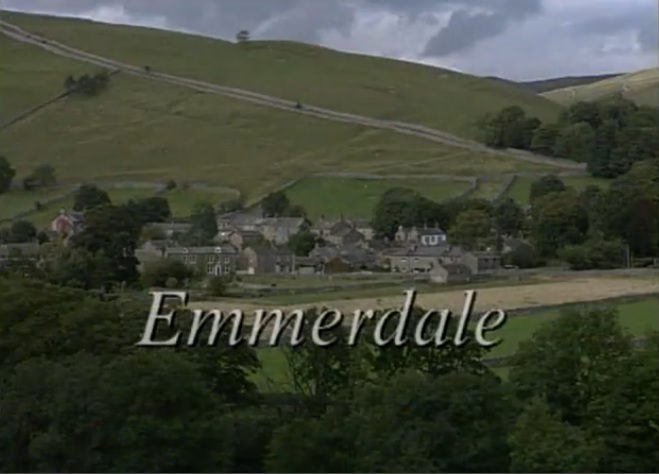
This image shows that the show is set within a green area, probably within the countryside. This further means that the characters are likely to know each other very well because the town is so small and isolated.

This image promises the audience that there is drama because, he would not be in hospital with an injured face if there hadn't been a previous fight or accident.
Tuesday, 27 February 2018
CUFFS EXAM Q3
CUFFS EXAM Q. 3 is worth 15 marks.
3. In this question you will be rewarded for drawing together elements from your full course of study, including different areas of the theoretical
framework and media contexts.
How far does the extract try to create a sense that it is portraying 'real life'?
In your answer you should:
analyse aspects of the extract giving detailed examples
judge how far these aspects create a sense of watching 'real life'
In this extract, it is obvious to the audience that what they are watching is intended to be based in a 'real life' situation. Firstly, the locations are very realistic, for example the shopping areas that we see, full of people, create a sense of realism, because a shopping area is so common and usual in everyday life. The natural lighting and the conventional clothing also adds to the sense that this is a scene based in everyday life. Without the normal clothes and lighting, the scene would be so much less realistic because clothing and what we see play a massive feature in our everyday lives. In addition to the media language used, is the use of the generic conventions of the police drama. For example the new policemen, Jake, and the old policemen, that is showing him around, both fit stereotypical ideas of how they should act, therefore they fit audience expectations and it doesn't undermine the sense of realism; rather enhances it.
There is also the use of stereotypes added in, to create the normality of an everyday scene in the audiences minds. For example, the fact that the criminals are obviously male, may make the scene seem more 'real' and scary because it is a generalisation that it would be men and so because they are men, it would enable instant interpretation into what is commencing. There is also the deliberate use of anti-stereotypes. For example, the beat officer wears a head-scarf and so may undermine the sense of realism, depending on the audience member. However, it is also natural to have racial diversity mixed within the show, because it gives the show an all-around approach - which is now almost a need within the media, because of how our society now views things.
In addition to this, they use gender equality and diversity, which could take away or add to the realism, depending on the audience member. It is likely to be more realistic though, because this representation of diversity used, fits into the modern timeline of equality requirements - for example, they have a gay policemen, a women policemen that is clearly respected by others, and an officer from ethnic minorities.
There are also more understandable, able to relate to, scenes. Firstly, the crime scene would be hard for an audience member to relate to, however the tension built through sound and camerawork makes the audience members feel a sense of fear, which opens up an opportunity for the audience to be able to relate to the policemen. We also enter a lunchtime scene, and experience more natural and inside scenes from some of the policemen's lives. As we can relate to these scenes and know what it is like to have lunch with our friends, this mainstream effect and gratifications allows the enhancing of a sense of realism for the audience members.
when the camerawork gets involved, there is a technique used where they use handheld camerawork. This is when the officer is threatened and it creates a sense of documentary realism. The continuity of the editing and the shot-reverse-shot used also does not draw attention to the artificiality of the scene and therefore enhances its effects.
The actors and actress's within the extract also act very convincingly. They stick to the roles given and display fear and banter in relevance to their role. Therefore, everything seems incredibly more real then it would, if they actors didn't play their roles accordances.
3. In this question you will be rewarded for drawing together elements from your full course of study, including different areas of the theoretical
framework and media contexts.
How far does the extract try to create a sense that it is portraying 'real life'?
In your answer you should:
analyse aspects of the extract giving detailed examples
judge how far these aspects create a sense of watching 'real life'
In this extract, it is obvious to the audience that what they are watching is intended to be based in a 'real life' situation. Firstly, the locations are very realistic, for example the shopping areas that we see, full of people, create a sense of realism, because a shopping area is so common and usual in everyday life. The natural lighting and the conventional clothing also adds to the sense that this is a scene based in everyday life. Without the normal clothes and lighting, the scene would be so much less realistic because clothing and what we see play a massive feature in our everyday lives. In addition to the media language used, is the use of the generic conventions of the police drama. For example the new policemen, Jake, and the old policemen, that is showing him around, both fit stereotypical ideas of how they should act, therefore they fit audience expectations and it doesn't undermine the sense of realism; rather enhances it.
There is also the use of stereotypes added in, to create the normality of an everyday scene in the audiences minds. For example, the fact that the criminals are obviously male, may make the scene seem more 'real' and scary because it is a generalisation that it would be men and so because they are men, it would enable instant interpretation into what is commencing. There is also the deliberate use of anti-stereotypes. For example, the beat officer wears a head-scarf and so may undermine the sense of realism, depending on the audience member. However, it is also natural to have racial diversity mixed within the show, because it gives the show an all-around approach - which is now almost a need within the media, because of how our society now views things.
In addition to this, they use gender equality and diversity, which could take away or add to the realism, depending on the audience member. It is likely to be more realistic though, because this representation of diversity used, fits into the modern timeline of equality requirements - for example, they have a gay policemen, a women policemen that is clearly respected by others, and an officer from ethnic minorities.
There are also more understandable, able to relate to, scenes. Firstly, the crime scene would be hard for an audience member to relate to, however the tension built through sound and camerawork makes the audience members feel a sense of fear, which opens up an opportunity for the audience to be able to relate to the policemen. We also enter a lunchtime scene, and experience more natural and inside scenes from some of the policemen's lives. As we can relate to these scenes and know what it is like to have lunch with our friends, this mainstream effect and gratifications allows the enhancing of a sense of realism for the audience members.
when the camerawork gets involved, there is a technique used where they use handheld camerawork. This is when the officer is threatened and it creates a sense of documentary realism. The continuity of the editing and the shot-reverse-shot used also does not draw attention to the artificiality of the scene and therefore enhances its effects.
The actors and actress's within the extract also act very convincingly. They stick to the roles given and display fear and banter in relevance to their role. Therefore, everything seems incredibly more real then it would, if they actors didn't play their roles accordances.
Tuesday, 20 February 2018
QUESTION 2// CUFFS
2. Analyse how far the extract depicts the police's point of view rather than the criminal's point of view.
In this extract the police's point of view is the one from which the audience sees it, because of several factors. Firstly the camera-shots enable us to see the police in a variety of ways through the camera, for example there are several close-ups of the policemen, as well as other shots and angles used, like medium-shot, letting us familiarize with the policemen. Whereas the criminals are simply shown in longer shots. The close-ups make the policemen stand out more and appear more unique from one another, as well as it gives the audience a clearer knowing of each of the policemen. However, because we don't see the criminals faces very clearly, we generalize them as just criminals, with no characterisation.
In addition to this, the editing allows for the policemen to dominate the screen. When the policemen act, we don't see any reactions from the criminals. However when the criminals act, it is followed by shots of reactions from the policemen. This shows to the audience their higher significance to the criminals because we see the policemen's emotions, rather than the criminals and this also gives the policemen more screen-time than them.
A narrative is also created, in which the relaxation of the characters we have already got to know, has been disrupted by characters not yet met by the audience. For example, we were watching an unwinding scene, where the younger, new policemen was waiting to receive his lunch and, just as it is placed in front of him he has to be dragged away because of the criminals, and is unable to eat. This is a fairly relatable scene, as no-one likes to be taken away from their food, and therefore makes the audience biased into disliking the criminal.
Additionally, the narrative follows the world of the police, not the criminals, who are only seen in the presence of the police and this, therefore, makes the police seem more important. For example we are closer and no more about the police because we saw them eating their lunch, however we did not see the criminals eating their lunch.
However, there are some sections that we can't see from the police perspective. For example, when the truck crashes into the shop, we see a clip from the CCTV footage and this, obviously, would not have been seen by the police yet.
In this extract the police's point of view is the one from which the audience sees it, because of several factors. Firstly the camera-shots enable us to see the police in a variety of ways through the camera, for example there are several close-ups of the policemen, as well as other shots and angles used, like medium-shot, letting us familiarize with the policemen. Whereas the criminals are simply shown in longer shots. The close-ups make the policemen stand out more and appear more unique from one another, as well as it gives the audience a clearer knowing of each of the policemen. However, because we don't see the criminals faces very clearly, we generalize them as just criminals, with no characterisation.
In addition to this, the editing allows for the policemen to dominate the screen. When the policemen act, we don't see any reactions from the criminals. However when the criminals act, it is followed by shots of reactions from the policemen. This shows to the audience their higher significance to the criminals because we see the policemen's emotions, rather than the criminals and this also gives the policemen more screen-time than them.
A narrative is also created, in which the relaxation of the characters we have already got to know, has been disrupted by characters not yet met by the audience. For example, we were watching an unwinding scene, where the younger, new policemen was waiting to receive his lunch and, just as it is placed in front of him he has to be dragged away because of the criminals, and is unable to eat. This is a fairly relatable scene, as no-one likes to be taken away from their food, and therefore makes the audience biased into disliking the criminal.
Additionally, the narrative follows the world of the police, not the criminals, who are only seen in the presence of the police and this, therefore, makes the police seem more important. For example we are closer and no more about the police because we saw them eating their lunch, however we did not see the criminals eating their lunch.
However, there are some sections that we can't see from the police perspective. For example, when the truck crashes into the shop, we see a clip from the CCTV footage and this, obviously, would not have been seen by the police yet.
QUESTION ONE// CUFFS
1. Analyse how sound is used in the extract to create meaning. Refer to at least two examples from the extract in your answer.
In this extract, sound is used to create meaning from the use of background sound, sound effects and off-screen speech. The background sound is incidental music used within the background of the action scene. The music is fast past, repetitive and on-going which creates a sense of tension in the watcher because it connotates the action, the danger, the excitement and the urgency of the situation. Without the music, the scene would be more calm for the audience and less exhilarating to experience.
Sound effects are, additionally, used, for example the screeching of the police cars as they zoom off and the shattering of glass as it is smashed. The use of the screeching sound represents the speed and urgency of the police car, which also shows that there is an exciting situation about to occur. Whereas the smashing of the glass, another semiotic, shows us that there is a crime being committed and it is a violent action.
Off-screen speech is also used, for example the sound of the police-officers call for help over the walky-talky creates contrasting connotations of emergency to those of the canteen. Therefore the audience gets a bigger understanding of both situations.
In this extract, sound is used to create meaning from the use of background sound, sound effects and off-screen speech. The background sound is incidental music used within the background of the action scene. The music is fast past, repetitive and on-going which creates a sense of tension in the watcher because it connotates the action, the danger, the excitement and the urgency of the situation. Without the music, the scene would be more calm for the audience and less exhilarating to experience.
Sound effects are, additionally, used, for example the screeching of the police cars as they zoom off and the shattering of glass as it is smashed. The use of the screeching sound represents the speed and urgency of the police car, which also shows that there is an exciting situation about to occur. Whereas the smashing of the glass, another semiotic, shows us that there is a crime being committed and it is a violent action.
Off-screen speech is also used, for example the sound of the police-officers call for help over the walky-talky creates contrasting connotations of emergency to those of the canteen. Therefore the audience gets a bigger understanding of both situations.
Subscribe to:
Posts (Atom)