In this extract, mise-en-scene is used through the use of outfits to create meaning. The criminals are all dressed in similar outfits: baggy trousers and t-shirts that are generally dirty. A lot of these characters also have big tattoos and un-brushed hair. These outfits and appearances are stereo typically associated with criminals, which therefore allows the audience to easily categorise them as the 'baddies' of the scene. This is further emphasised through the contrast in outfits of the police from the criminals: they wear suits and matching uniforms that are neat, smart and polished. Their uniformed, organised appearance connotes to the audience their authority and power. Therefore, when we see the police raid the house, the audience are easily able to understand that the men inside are bad and criminally acting by not listening to the police.
Another use of mise-en-scene within the extract is lighting. Outside of the house, it is normal daylight. However, this contrasts with the inside of the house, which is a dark, desaturated light and a lot harder to see. The sudden loss of light within the house, connotes a serious situation as well as danger - because darkness is usually associated with evil. Therefore, through the darkening of the lighting, the audience understand the situation has become more serious and dangerous.
Wednesday, 27 March 2019

Friday, 1 March 2019
Observer Q9

There is a dominance of colourful promotional material on the cover, for example -'free supplement inside' -which shows the social context of consumerism. People not only want but expect and accept self-promotion in media products. The Observer clearly knows this and happily promotes themselves on this tweet. There is also a dominance of photographs on the tweet, which is highlighted by the saturated colour and lack of text. This shows that, due to what the readers want, traditional broadsheet newspapers have slowly adapted to become more like tabloids.
There are also ethnically diverse representations on the front page, representing the diversity of modern Britain as well as the diversity of the readers of the Observer - this reflects the social and cultural contexts. In addition to diversity, there is also a diverse range of female representations. For example it has an image of a woman who is following a stereotypical role of females: as a cook - but there is also another woman who is represented as fit and sporty. These representations contrast each other and show the social context of the time - how feminism has had a big impact on society.
The lead story is on Brexit, which shows the political context of the time - it shows that Brexit has the dominance when it comes to political debate in England. The use of big text, represents its importance within the newspaper and also suggests that it is serious and important. Many of the Observer readers are middle class and follow the left side of the political scale, therefore the Brexit article would be of a lot of interest to the audience - showing the importance of politics within our society.
Additionally, the fact that this article is in the form of a tweet gives the chance for a lot of interactivity - in the form of: retweets, likes and comments. This shows a social context in which audiences now expect to have a participatory relationship with media forms.
Wednesday, 27 February 2019
exam practice: CLASH
CLASH uses media language such as colour to represent their musicians. In a lot of Clash magazines the colour are desaturated or very plain. This suggests to the reader that the musicians are serious and are also taken seriously by Clash. It may also connote the idea that the music they play is dark or that the musicians have a hard life. The usual use of a black background also connotes sophistication and elegance - these musicians aren't seen as a joke.
Often the main splash image is used to support these ideas. In a lot of Clash magazines the main splash is blurred or slightly hidden. The main splash never usually looks directly at the camera and the eyes of the musician are obscured. This suggests that clash sees musicians above everyone else -they are stars and we don't see their eyes because we can't understand the hardships that musicians go to get their fame, therefore they are hidden/blurred from the rest of us. The front cover of most clash magazines are usually dominated by the musician. Unlike other magazines, clash tends to only have one image on the front. This emphasises the importance of that particular musician within the magazine and draws the readers attention straight to them.
The layouts is also very plain, with barely any coverlines or other writing on the front. Clash has the masthead in a sans-serif font and capitalisation is used, which connotes seriousness and authenticity. Having only one image and barely any coverlines once again emphasises the musician as well as the masthead, to the readers. When there are coverlines being used, they are often wonky or toppling over. This highlights the originality of the magazine and makes them stand out - showing that their musicians are different from the rest.
Often the main splash image is used to support these ideas. In a lot of Clash magazines the main splash is blurred or slightly hidden. The main splash never usually looks directly at the camera and the eyes of the musician are obscured. This suggests that clash sees musicians above everyone else -they are stars and we don't see their eyes because we can't understand the hardships that musicians go to get their fame, therefore they are hidden/blurred from the rest of us. The front cover of most clash magazines are usually dominated by the musician. Unlike other magazines, clash tends to only have one image on the front. This emphasises the importance of that particular musician within the magazine and draws the readers attention straight to them.
The layouts is also very plain, with barely any coverlines or other writing on the front. Clash has the masthead in a sans-serif font and capitalisation is used, which connotes seriousness and authenticity. Having only one image and barely any coverlines once again emphasises the musician as well as the masthead, to the readers. When there are coverlines being used, they are often wonky or toppling over. This highlights the originality of the magazine and makes them stand out - showing that their musicians are different from the rest.
Thursday, 7 February 2019
Analyse the representations found in the UK television ad break for The Lego Movie. [10]
The original adverts from this advert break were not made in mind with the idea of lego, however Warner Bros decided to convert them to lego so as to advertise for their upcoming movie: the Lego Movie.
Although all of the brands being advertised are more for an adult audience, they are made family friendly through the use of very bright colours and the association that lego has with children - this encourages many ages to watch the movie as it is by a well-known universal brand which is embracing a child-friendly nature. All ages are also encouraged to watch it because adults grew up using lego and want a flashback of their childhood and children are currently obsessed with the brand created in 1932.
The lego movie advert break also encourages people to watch it through the humour it promises. It is humorous because it personifies lego bricks as human characters carrying out human activities in a lego world - which is essentially just like the movie. It takes serious moments, such as a PSA from the British heart society telling about what to do when someone is having a heart attack, and makes light of the situation. This shows it has aspects of real life promotes the lego movie in a way that suggests it has serious situations but is also going to be fun. The advert break also uses well-known brands such as Premier Inn and Confused.com to promise that the movie is high-quality - these brands wouldn't have wanted their adverts to be made out of lego unless the movie was going to be amazing. This would encourage people seeing the lego movie advert break to watch the actually movie.
Emmett is used as a good model for the younger audience. He has a simple yet vulnerable personality, however he isn't the typical masculine figure often presented today. Although he is presented at first as just a normal person trying to fit in, he ends up saving the day. Young children will understand from him, that no matter what you're like or how you speak or what opinions you have, you are still special in some way. As this is a message many parents try and give to their children, adults will encourage their children to watch the movie.
Contrastingly, the female Wyldstyle is strong and heroic, embracing the strong power of feminism. She challenges female stereotypes through many moments in the movie, for example building a motorbike and riding it across the lego city. She empowers female audiences as she is the one being a hero, rather than typically a male. This makes the movie also suitable for females.
Although all of the brands being advertised are more for an adult audience, they are made family friendly through the use of very bright colours and the association that lego has with children - this encourages many ages to watch the movie as it is by a well-known universal brand which is embracing a child-friendly nature. All ages are also encouraged to watch it because adults grew up using lego and want a flashback of their childhood and children are currently obsessed with the brand created in 1932.
The lego movie advert break also encourages people to watch it through the humour it promises. It is humorous because it personifies lego bricks as human characters carrying out human activities in a lego world - which is essentially just like the movie. It takes serious moments, such as a PSA from the British heart society telling about what to do when someone is having a heart attack, and makes light of the situation. This shows it has aspects of real life promotes the lego movie in a way that suggests it has serious situations but is also going to be fun. The advert break also uses well-known brands such as Premier Inn and Confused.com to promise that the movie is high-quality - these brands wouldn't have wanted their adverts to be made out of lego unless the movie was going to be amazing. This would encourage people seeing the lego movie advert break to watch the actually movie.
Emmett is used as a good model for the younger audience. He has a simple yet vulnerable personality, however he isn't the typical masculine figure often presented today. Although he is presented at first as just a normal person trying to fit in, he ends up saving the day. Young children will understand from him, that no matter what you're like or how you speak or what opinions you have, you are still special in some way. As this is a message many parents try and give to their children, adults will encourage their children to watch the movie.
Contrastingly, the female Wyldstyle is strong and heroic, embracing the strong power of feminism. She challenges female stereotypes through many moments in the movie, for example building a motorbike and riding it across the lego city. She empowers female audiences as she is the one being a hero, rather than typically a male. This makes the movie also suitable for females.
Thursday, 31 January 2019
HOW DOES THE AVENGERS CHALLENGE TRADITIONAL REPRESENTATIONS OF GENDER TO REACH A 1960's AUDIENCE?
In the Avengers, traditional gender views of the time were challenged to give a message to the 1960 audience: women are capable of the same things as men. Emma Peel acts as a strong female lead, which was unusual during this time - women generally acted as helpless wives who needed to be saved by the man. However, it is made clear from the first episode that Emma Peel is capable enough of looking after herself. When Steed enters her house she is clearly practising fencing - which was generally seen as a masculine sport - and challenges Steed to a fight. This shows she's not afraid of standing up to a man and is able to fight back. This was incredibly unusual for a tv programme in the 1960's because women were never seen standing up to men and acting as their equals. However, the views of these times aren't completely challenged here. Although Emma Peel challenges Steed to a fight, in the end, Steed wins because he is ultimately the male - therefore he is seen as the stronger one of the time and he wins.
Emma peel also challenges stereotypes because she is seen as very intelligent and works on her own to solve cases. This shows that men don't always hold all of the power. She also answers Steed back without a lot of warmth sometimes. For example, when Steed asks for coffee, peel doesn't follow the usual stereotype and run and get one for him, rather tells him where the coffee is and leaves him to get it. This shows she believes she's equal to Steed and will not grovel for him just because she's a woman. This is a real challenge to the stereotype of this time, where women were expected to look after the man. The Avengers uses Peel in this way to show women that they weren't insignificant to the man.
However, following the stereotypes of the 1960's, Emma Peel is often dressed in very tight outfits which tend to sexualise her. Additionally, whilst Steed and Peel were fencing, Steed slaps Peel's bottom as she walks away, which would nowadays be seen as completely wrong. This action once again sexulaises Emma Peel. This shows that, although the Avengers challenges traditional views of gender in the 1960's to start another opinion on women, it also follows some stereotypes of women - conforming to some views in the 1960's.
Emma peel also challenges stereotypes because she is seen as very intelligent and works on her own to solve cases. This shows that men don't always hold all of the power. She also answers Steed back without a lot of warmth sometimes. For example, when Steed asks for coffee, peel doesn't follow the usual stereotype and run and get one for him, rather tells him where the coffee is and leaves him to get it. This shows she believes she's equal to Steed and will not grovel for him just because she's a woman. This is a real challenge to the stereotype of this time, where women were expected to look after the man. The Avengers uses Peel in this way to show women that they weren't insignificant to the man.
However, following the stereotypes of the 1960's, Emma Peel is often dressed in very tight outfits which tend to sexualise her. Additionally, whilst Steed and Peel were fencing, Steed slaps Peel's bottom as she walks away, which would nowadays be seen as completely wrong. This action once again sexulaises Emma Peel. This shows that, although the Avengers challenges traditional views of gender in the 1960's to start another opinion on women, it also follows some stereotypes of women - conforming to some views in the 1960's.
Thursday, 24 January 2019
Analyse the representation of Jamaican Reggae music and musicians such as Bob Marley in this MOJO front cover. (5 marks)

In this magazine extract, MOJO uses a plain white with bright accent colours of red, yellow and green to connote a sense of fun and light-heartedness. This is further suggested by the main splash - Bob Marley - who is large, smiling and in a colourful shirt. This suggests that MOJO see's their musicians as fun. However, this is different from the stereotypical MOJO magazine as this is usually in monochrome colours of a young, white male. Therefore, this new style MOJO have presented suggest they see Jamaican Reggae as more fun and less serious than their usual genres. Bob Marley's importance is also shown as he covers the title 'MOJO' suggesting he is the key to this magazine.
This idea is further reinforced by the editor who puts the word 'Marley' in red, yellow and green - making it the most colourful and biggest word on the cover. This again connotes the idea of Bob Marley being a fun yet important figure in the world of Jamaican Reggae as well as within MOJO. Jamaican Reggae is also highlighted as hardcore and serious with words such as 'Reggae Revolution' which connote the sense of overpowering riots - suggesting Jamaican Reggae is different but amazing.
Wednesday, 16 January 2019
Observer online: messages and values Q9
1. The major use of newspapers is to offer a sense of knowing
what is going on in the world.The Observer knows that its readers are serious and interested in international affairs. This is evident in hard news articles about... politics in other countries as well as our own. For example the article 'US news/ Trump vents fury over Russia stories and again threatens national emergency'. shows that the Observer believes its readers wants to know about international, hard news affairs.
2. The Observer meets its audience's need for a range of cultural, sporting and artistic news. It provides these with...articles such as 'Music/ 2019 Brit award nominations topped by Anne-Marie and Dua Lipa'.
3. The Observer does not shy away from 'difficult' issues that could make uncomfortable reading, such as...'Politics/ Labour set to call vote to topple Theresa May's government'.
4. The Observer has sections which are designed to appeal to
different types of readers.The Observer reflects the diversity of its readership in articles on...other races and religions. An article which reflects this is 'Saudi teen/ Rahaf al- Qunun lands in Toronto after long journey to safety'.
5. Newspaper readership can still be used as a symbol of one’s
what is going on in the world.The Observer knows that its readers are serious and interested in international affairs. This is evident in hard news articles about... politics in other countries as well as our own. For example the article 'US news/ Trump vents fury over Russia stories and again threatens national emergency'. shows that the Observer believes its readers wants to know about international, hard news affairs.
2. The Observer meets its audience's need for a range of cultural, sporting and artistic news. It provides these with...articles such as 'Music/ 2019 Brit award nominations topped by Anne-Marie and Dua Lipa'.
3. The Observer does not shy away from 'difficult' issues that could make uncomfortable reading, such as...'Politics/ Labour set to call vote to topple Theresa May's government'.
4. The Observer has sections which are designed to appeal to
different types of readers.The Observer reflects the diversity of its readership in articles on...other races and religions. An article which reflects this is 'Saudi teen/ Rahaf al- Qunun lands in Toronto after long journey to safety'.
5. Newspaper readership can still be used as a symbol of one’s
social identity. The term ‘Guardian reader’ connotes a certain
type of social attitude and The Observer similarly reinforces
a set of social and political attitudes, and thus identity, in its
representations. For example, Observer readers like to think
of themselves as open-minded and this is reflected in the
Observer’s practice of allowing both sides of an argument
equally to be put when the newspaper is clearly on one side
of this argument. There is an example of this in....the article 'Brexit/ surprise boost for Bulgarian resorts'.
5. The entertainment function of newspapers may take the
form of humour. It may take the form of diversion into
a celebrity world of ‘glamour’. It may take the form of human
interest stories in which readers are invited to sympathise with
the subjects of the article. Newspapers further offer games,
puzzles, crosswords and the like. At the higher end, sections
such as the New Review in the Observer may offer the pleasure
of extremely well-written think pieces and literature reviews. An example of this is.... 'Schools/ sleep-deprived pupils need an extra hour in bed'
Music Videos Q2
This video is documentary style mostly hand-held camerawork, de-saturated colour and fast-paced editing. SB
This video has saturated colour, more controlled camerawork, slower-paced editing. TD
This video consists of mostly montage shots. SB
This video has more developed editing with cause and effect. TD
In this video, the singer values rebellion, which is seen in the narrative. SB
In this video, the singer values 'fitting in', conformity, albeit to an oppressive system, which is seen in the narrative. TD
This video is set in LA, a big city, with its connotations of street credibility. SB
The mise-en-scene of this video is American suburbia with its connotations of conformity. TD
This video is intertextual in its narrative (=it makes references to high school drama). TD
In this video, the singer performs to camera. TD + SB
In this video, real locations and 'everyday' costume for the performers connote a sense of naturalism. SB
In this video, there is a sense of linear narrative (a story is told, in the order it unfolds). TD
This video has saturated colour, more controlled camerawork, slower-paced editing. TD
This video consists of mostly montage shots. SB
This video has more developed editing with cause and effect. TD
In this video, the singer values rebellion, which is seen in the narrative. SB
In this video, the singer values 'fitting in', conformity, albeit to an oppressive system, which is seen in the narrative. TD
This video is set in LA, a big city, with its connotations of street credibility. SB
The mise-en-scene of this video is American suburbia with its connotations of conformity. TD
This video is intertextual in its narrative (=it makes references to high school drama). TD
In this video, the singer performs to camera. TD + SB
In this video, real locations and 'everyday' costume for the performers connote a sense of naturalism. SB
In this video, there is a sense of linear narrative (a story is told, in the order it unfolds). TD
Thursday, 3 January 2019
Newspapers/ Observer beliefs
Broadsheets generally value hard news such as political news which is currently shown on the front page of the Observer in which a main article is labelled 'Politics: Tory and Labour MPs to force Brexit delay if May's deal is voted down' which is showing to their readers that they're not afraid to tackle difficult issues in the news. They also value an international outlook, covering foreign affairs, which is shown through the current article "Syria: Assad has decisively won his brutal battle", showing the believe it is right to educate their readers on affairs other than that which concern England.
They serve a broad audience by including sport, culture, the arts, with many featured articles: its balance of features reflects that it values culture as well as politics and hard news. Examples of featured articles and other audience genres would be the article: "Life without plastic: Pioneer families show how its done." and "Football: Fernandhino's glaring absence reveals flaw in Man City masterplan."
They serve a broad audience by including sport, culture, the arts, with many featured articles: its balance of features reflects that it values culture as well as politics and hard news. Examples of featured articles and other audience genres would be the article: "Life without plastic: Pioneer families show how its done." and "Football: Fernandhino's glaring absence reveals flaw in Man City masterplan."
Saturday, 1 December 2018
newspapers Q8
One way in which the observer uses media language to create meaning is through use of colours. The homepage is made up of rich burgundy's and royal blues which connotes importance because these colours are often associated with a sense of seriousness. These shows readers of the observer that the Observer takes it's news seriously and genuinely.
Additionally the structure of the homepage also reflects this. It has a linear structure which is neatly organised and sectioned, with the more important/ main articles made bigger than the others. This would help readers to navigate around the homepage and also suggests that the Observer is organised and knows what they are talking about.
Additionally the structure of the homepage also reflects this. It has a linear structure which is neatly organised and sectioned, with the more important/ main articles made bigger than the others. This would help readers to navigate around the homepage and also suggests that the Observer is organised and knows what they are talking about.
Thursday, 29 November 2018
newspapers Q9
‘The representations featured in the online
observer reflect its values and beliefs.’ Discuss how far you agree with this statement?
The observer and the guardian
are known for being supportive of the left side of the political scale and
therefore many of their articles are likely to support the social liberals. We
can see they take politics very seriously through the amount of articles they
have on their homepage about it. This shows they have a ‘hard news’ priority.
For example, the top story – represented by it being the biggest on the screen –
is about Theresa May and Brexit.
We can also see another one of
the observer’s values and beliefs through the featured articles. The Observer
intends to reflect today’s modernity and diversity through the news regarding
international relations. It mentions ‘Mrs Obama’ as well as ‘us immigration’
and ‘Saudi dissidents’ on their homepage. This shows they have intentions of
mentioning countries other than England and even countries outside of Europe –
not insular but inclusive.
Additionally, they show, not
only their interest in diversity of other countries but also the way they value
ethnicity as well as age by references. For example, on the homepage they have
an article dedicated to ‘Jamal Khashoggi’ which represents reflection of
ethnical diversity. They also mention the health of children through a 'salt' in food article which shows they not only worry about the future of the country within politics, but the future of health as well. This reflects their values and beliefs.
Through use of diversity in
many areas as well as a lot of emphasis on political topics such as Brexit, I
agree that the online observer reflects its values and beliefs through its features.
Thursday, 15 March 2018
EXAM Q4


On the cover of this MOJO magazine, the main splash of the musician is the boldest, eye-capturing image on the whole cover. His head covers the head-mast because we already are familiar with the brand MOJO, and it is clearly evident what it says. However, it is significant that this artist's head covers the word, because that is how we know he is the most important thing on the cover, and so, the biggest musician featured within the magazine. To support this idea, his name is the next biggest word featured, other than the mast-head. This way, we know even more about the face on the cover and how 'Ray Davies' is the biggest topic.
Sidelining his face are the other smaller topics of the magazine. The fact that they are not to one side of him, or going across him, but that they are circling his face, shows that, even with all these extra stories, he is the main feature.
The magazine also colour-coordinates around the musician. The main colour features are black, white and red. This gives the impression that the magazine is sophisticated. The main-splash supports this by not staring directly at the reader - instead he is staring into the distance which creates an enhanced allusion of sophistication. The yellow adds contrast to the cover by being a slightly more fun colour and representing the more exciting parts of the magazine.
Thursday, 8 March 2018
EMMERDALE

This picture promises the audience emotions as well as what could be a strong bond between a couple, mother and daughter, friends or even sisters.

This picture shows that there will be different age-groups involved within the show, which means there will be range of situations and will cover a larger viewing age-audience. It also shows that the show could be situated around the idea of big families.
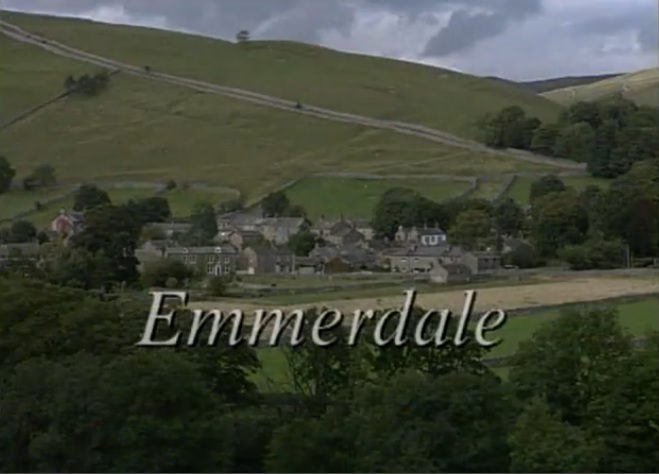
This image shows that the show is set within a green area, probably within the countryside. This further means that the characters are likely to know each other very well because the town is so small and isolated.

This image promises the audience that there is drama because, he would not be in hospital with an injured face if there hadn't been a previous fight or accident.
Tuesday, 27 February 2018
CUFFS EXAM Q3
CUFFS EXAM Q. 3 is worth 15 marks.
3. In this question you will be rewarded for drawing together elements from your full course of study, including different areas of the theoretical
framework and media contexts.
How far does the extract try to create a sense that it is portraying 'real life'?
In your answer you should:
analyse aspects of the extract giving detailed examples
judge how far these aspects create a sense of watching 'real life'
In this extract, it is obvious to the audience that what they are watching is intended to be based in a 'real life' situation. Firstly, the locations are very realistic, for example the shopping areas that we see, full of people, create a sense of realism, because a shopping area is so common and usual in everyday life. The natural lighting and the conventional clothing also adds to the sense that this is a scene based in everyday life. Without the normal clothes and lighting, the scene would be so much less realistic because clothing and what we see play a massive feature in our everyday lives. In addition to the media language used, is the use of the generic conventions of the police drama. For example the new policemen, Jake, and the old policemen, that is showing him around, both fit stereotypical ideas of how they should act, therefore they fit audience expectations and it doesn't undermine the sense of realism; rather enhances it.
There is also the use of stereotypes added in, to create the normality of an everyday scene in the audiences minds. For example, the fact that the criminals are obviously male, may make the scene seem more 'real' and scary because it is a generalisation that it would be men and so because they are men, it would enable instant interpretation into what is commencing. There is also the deliberate use of anti-stereotypes. For example, the beat officer wears a head-scarf and so may undermine the sense of realism, depending on the audience member. However, it is also natural to have racial diversity mixed within the show, because it gives the show an all-around approach - which is now almost a need within the media, because of how our society now views things.
In addition to this, they use gender equality and diversity, which could take away or add to the realism, depending on the audience member. It is likely to be more realistic though, because this representation of diversity used, fits into the modern timeline of equality requirements - for example, they have a gay policemen, a women policemen that is clearly respected by others, and an officer from ethnic minorities.
There are also more understandable, able to relate to, scenes. Firstly, the crime scene would be hard for an audience member to relate to, however the tension built through sound and camerawork makes the audience members feel a sense of fear, which opens up an opportunity for the audience to be able to relate to the policemen. We also enter a lunchtime scene, and experience more natural and inside scenes from some of the policemen's lives. As we can relate to these scenes and know what it is like to have lunch with our friends, this mainstream effect and gratifications allows the enhancing of a sense of realism for the audience members.
when the camerawork gets involved, there is a technique used where they use handheld camerawork. This is when the officer is threatened and it creates a sense of documentary realism. The continuity of the editing and the shot-reverse-shot used also does not draw attention to the artificiality of the scene and therefore enhances its effects.
The actors and actress's within the extract also act very convincingly. They stick to the roles given and display fear and banter in relevance to their role. Therefore, everything seems incredibly more real then it would, if they actors didn't play their roles accordances.
3. In this question you will be rewarded for drawing together elements from your full course of study, including different areas of the theoretical
framework and media contexts.
How far does the extract try to create a sense that it is portraying 'real life'?
In your answer you should:
analyse aspects of the extract giving detailed examples
judge how far these aspects create a sense of watching 'real life'
In this extract, it is obvious to the audience that what they are watching is intended to be based in a 'real life' situation. Firstly, the locations are very realistic, for example the shopping areas that we see, full of people, create a sense of realism, because a shopping area is so common and usual in everyday life. The natural lighting and the conventional clothing also adds to the sense that this is a scene based in everyday life. Without the normal clothes and lighting, the scene would be so much less realistic because clothing and what we see play a massive feature in our everyday lives. In addition to the media language used, is the use of the generic conventions of the police drama. For example the new policemen, Jake, and the old policemen, that is showing him around, both fit stereotypical ideas of how they should act, therefore they fit audience expectations and it doesn't undermine the sense of realism; rather enhances it.
There is also the use of stereotypes added in, to create the normality of an everyday scene in the audiences minds. For example, the fact that the criminals are obviously male, may make the scene seem more 'real' and scary because it is a generalisation that it would be men and so because they are men, it would enable instant interpretation into what is commencing. There is also the deliberate use of anti-stereotypes. For example, the beat officer wears a head-scarf and so may undermine the sense of realism, depending on the audience member. However, it is also natural to have racial diversity mixed within the show, because it gives the show an all-around approach - which is now almost a need within the media, because of how our society now views things.
In addition to this, they use gender equality and diversity, which could take away or add to the realism, depending on the audience member. It is likely to be more realistic though, because this representation of diversity used, fits into the modern timeline of equality requirements - for example, they have a gay policemen, a women policemen that is clearly respected by others, and an officer from ethnic minorities.
There are also more understandable, able to relate to, scenes. Firstly, the crime scene would be hard for an audience member to relate to, however the tension built through sound and camerawork makes the audience members feel a sense of fear, which opens up an opportunity for the audience to be able to relate to the policemen. We also enter a lunchtime scene, and experience more natural and inside scenes from some of the policemen's lives. As we can relate to these scenes and know what it is like to have lunch with our friends, this mainstream effect and gratifications allows the enhancing of a sense of realism for the audience members.
when the camerawork gets involved, there is a technique used where they use handheld camerawork. This is when the officer is threatened and it creates a sense of documentary realism. The continuity of the editing and the shot-reverse-shot used also does not draw attention to the artificiality of the scene and therefore enhances its effects.
The actors and actress's within the extract also act very convincingly. They stick to the roles given and display fear and banter in relevance to their role. Therefore, everything seems incredibly more real then it would, if they actors didn't play their roles accordances.
Tuesday, 20 February 2018
QUESTION 2// CUFFS
2. Analyse how far the extract depicts the police's point of view rather than the criminal's point of view.
In this extract the police's point of view is the one from which the audience sees it, because of several factors. Firstly the camera-shots enable us to see the police in a variety of ways through the camera, for example there are several close-ups of the policemen, as well as other shots and angles used, like medium-shot, letting us familiarize with the policemen. Whereas the criminals are simply shown in longer shots. The close-ups make the policemen stand out more and appear more unique from one another, as well as it gives the audience a clearer knowing of each of the policemen. However, because we don't see the criminals faces very clearly, we generalize them as just criminals, with no characterisation.
In addition to this, the editing allows for the policemen to dominate the screen. When the policemen act, we don't see any reactions from the criminals. However when the criminals act, it is followed by shots of reactions from the policemen. This shows to the audience their higher significance to the criminals because we see the policemen's emotions, rather than the criminals and this also gives the policemen more screen-time than them.
A narrative is also created, in which the relaxation of the characters we have already got to know, has been disrupted by characters not yet met by the audience. For example, we were watching an unwinding scene, where the younger, new policemen was waiting to receive his lunch and, just as it is placed in front of him he has to be dragged away because of the criminals, and is unable to eat. This is a fairly relatable scene, as no-one likes to be taken away from their food, and therefore makes the audience biased into disliking the criminal.
Additionally, the narrative follows the world of the police, not the criminals, who are only seen in the presence of the police and this, therefore, makes the police seem more important. For example we are closer and no more about the police because we saw them eating their lunch, however we did not see the criminals eating their lunch.
However, there are some sections that we can't see from the police perspective. For example, when the truck crashes into the shop, we see a clip from the CCTV footage and this, obviously, would not have been seen by the police yet.
In this extract the police's point of view is the one from which the audience sees it, because of several factors. Firstly the camera-shots enable us to see the police in a variety of ways through the camera, for example there are several close-ups of the policemen, as well as other shots and angles used, like medium-shot, letting us familiarize with the policemen. Whereas the criminals are simply shown in longer shots. The close-ups make the policemen stand out more and appear more unique from one another, as well as it gives the audience a clearer knowing of each of the policemen. However, because we don't see the criminals faces very clearly, we generalize them as just criminals, with no characterisation.
In addition to this, the editing allows for the policemen to dominate the screen. When the policemen act, we don't see any reactions from the criminals. However when the criminals act, it is followed by shots of reactions from the policemen. This shows to the audience their higher significance to the criminals because we see the policemen's emotions, rather than the criminals and this also gives the policemen more screen-time than them.
A narrative is also created, in which the relaxation of the characters we have already got to know, has been disrupted by characters not yet met by the audience. For example, we were watching an unwinding scene, where the younger, new policemen was waiting to receive his lunch and, just as it is placed in front of him he has to be dragged away because of the criminals, and is unable to eat. This is a fairly relatable scene, as no-one likes to be taken away from their food, and therefore makes the audience biased into disliking the criminal.
Additionally, the narrative follows the world of the police, not the criminals, who are only seen in the presence of the police and this, therefore, makes the police seem more important. For example we are closer and no more about the police because we saw them eating their lunch, however we did not see the criminals eating their lunch.
However, there are some sections that we can't see from the police perspective. For example, when the truck crashes into the shop, we see a clip from the CCTV footage and this, obviously, would not have been seen by the police yet.
QUESTION ONE// CUFFS
1. Analyse how sound is used in the extract to create meaning. Refer to at least two examples from the extract in your answer.
In this extract, sound is used to create meaning from the use of background sound, sound effects and off-screen speech. The background sound is incidental music used within the background of the action scene. The music is fast past, repetitive and on-going which creates a sense of tension in the watcher because it connotates the action, the danger, the excitement and the urgency of the situation. Without the music, the scene would be more calm for the audience and less exhilarating to experience.
Sound effects are, additionally, used, for example the screeching of the police cars as they zoom off and the shattering of glass as it is smashed. The use of the screeching sound represents the speed and urgency of the police car, which also shows that there is an exciting situation about to occur. Whereas the smashing of the glass, another semiotic, shows us that there is a crime being committed and it is a violent action.
Off-screen speech is also used, for example the sound of the police-officers call for help over the walky-talky creates contrasting connotations of emergency to those of the canteen. Therefore the audience gets a bigger understanding of both situations.
In this extract, sound is used to create meaning from the use of background sound, sound effects and off-screen speech. The background sound is incidental music used within the background of the action scene. The music is fast past, repetitive and on-going which creates a sense of tension in the watcher because it connotates the action, the danger, the excitement and the urgency of the situation. Without the music, the scene would be more calm for the audience and less exhilarating to experience.
Sound effects are, additionally, used, for example the screeching of the police cars as they zoom off and the shattering of glass as it is smashed. The use of the screeching sound represents the speed and urgency of the police car, which also shows that there is an exciting situation about to occur. Whereas the smashing of the glass, another semiotic, shows us that there is a crime being committed and it is a violent action.
Off-screen speech is also used, for example the sound of the police-officers call for help over the walky-talky creates contrasting connotations of emergency to those of the canteen. Therefore the audience gets a bigger understanding of both situations.
Thursday, 1 February 2018
EXAM Q8 (x2)
On the Observer's home page, particular language stands out to create meaning and intrigue for the page. Firstly, we are drawn to the page because it is full of colour, and the colour isn't just all over the place, it is nice and unified. The page also grabs the readers attention because every single article featured, shows a person/ human. As most people are usually more interested about what is going on within human lives, this is a great way to have people focusing more on the texts. The main article is the biggest one and draws the reader in because it uses a rhetorical question, 'Can I forgive the man that raped me?' The affect of this makes us want to know the answer, as well as hear the answer from the interviewee, and know what the story is. Using a question mark is a great way to entice the reader. The deep blue that frames everything implys depth and stability. The colour blue is often associated with trust, confidence and intelligence, which makes readers more able to trust the news story's and read the content more often.
The title typeface is a font that mixes both old styles and modern styles. This suggests that the observer covers all types of new and targets both audiences, not just one. This would give a chance for everyone to read the Observer because it shows that most age groups are able to read the news they wish. The typeface of the headings are styled in a way so that the reader is almost left on a cliff hanger. The main article is the biggest one and draws the reader in because it uses a rhetorical question, 'Can I forgive the man that raped me?' The affect of this makes us want to know the answer, as well as hear the answer from the interviewee, and know what the story is. Using a question mark is a great way to entice the reader because we are produced with an un-answered interesting question.
The other articles are smaller because they are not the featuring ones. This means, after having looked at the big one, we have to focus more on the next ones. Another example of an interesting caption is 'GIGI HADID, a model with a fabulous figure (30 million instagram followers)' This is another good way to draw audience in because it straight away mentions a famous model which most people have probably heard about and want to hear more. It adds extra information as well, for people who don't know who she is, such as the fact that she is a model and the fact that she has 30 million followers on instagram. This is a very clever technique to list both of these things because instagram is an extremely well-known social media app which most people have and know a lot about. By stating her figures of 30 millionf followers it makes people want to know more about Gigi Hadid because 30 million is a huge following. The articles also target certain people. For example, the Gigi Hadid article mainlt targets women and her fans. Whilst the main article targets all adult audience.
The home page is presented extremely neatly with the same colour regime and pretty much the same fonts. This shows it takes its news seriously because the whole page is uniformed and uniform usually means objectivity and authority - which gives off a very strong sense of objectivity.
In the titles of the articles, there are a range of literary techniques used to draw in the readers. In the Gigi Hadid article it uses alliteration of 'fabulous figure'. There is also a lot of use of emotive language used in the form of quotes, for example the headline for another news story was 'The traditional duet has the women reliant on the man, I'm sick of it.' is a good way to express emotive language and draw the reader in. It is effective because it states a point and an opinion, which a lot of people may be able to relate to but also people want to hear why she has this opinion.
The title typeface is a font that mixes both old styles and modern styles. This suggests that the observer covers all types of new and targets both audiences, not just one. This would give a chance for everyone to read the Observer because it shows that most age groups are able to read the news they wish. The typeface of the headings are styled in a way so that the reader is almost left on a cliff hanger. The main article is the biggest one and draws the reader in because it uses a rhetorical question, 'Can I forgive the man that raped me?' The affect of this makes us want to know the answer, as well as hear the answer from the interviewee, and know what the story is. Using a question mark is a great way to entice the reader because we are produced with an un-answered interesting question.
The other articles are smaller because they are not the featuring ones. This means, after having looked at the big one, we have to focus more on the next ones. Another example of an interesting caption is 'GIGI HADID, a model with a fabulous figure (30 million instagram followers)' This is another good way to draw audience in because it straight away mentions a famous model which most people have probably heard about and want to hear more. It adds extra information as well, for people who don't know who she is, such as the fact that she is a model and the fact that she has 30 million followers on instagram. This is a very clever technique to list both of these things because instagram is an extremely well-known social media app which most people have and know a lot about. By stating her figures of 30 millionf followers it makes people want to know more about Gigi Hadid because 30 million is a huge following. The articles also target certain people. For example, the Gigi Hadid article mainlt targets women and her fans. Whilst the main article targets all adult audience.
The home page is presented extremely neatly with the same colour regime and pretty much the same fonts. This shows it takes its news seriously because the whole page is uniformed and uniform usually means objectivity and authority - which gives off a very strong sense of objectivity.
In the titles of the articles, there are a range of literary techniques used to draw in the readers. In the Gigi Hadid article it uses alliteration of 'fabulous figure'. There is also a lot of use of emotive language used in the form of quotes, for example the headline for another news story was 'The traditional duet has the women reliant on the man, I'm sick of it.' is a good way to express emotive language and draw the reader in. It is effective because it states a point and an opinion, which a lot of people may be able to relate to but also people want to hear why she has this opinion.
Thursday, 25 January 2018
Filming
For our short sixty second horror clips we filmed today, my group decided to use the prop of a doll from st.lucia. Firstly we devised a quick plan for what our horror clip would be and we instantly came up with the idea of pretending this doll was a voodoo doll (a doll that, however you hurt it, it hurts the person of your choice too)We started by heading to creepy scenery, which we chose the tunnel for because it is dark and used to be the dungeons of a castle. Because the lighting was bad, we had trouble focusing on the different objects and walls, and when we were filming the clips often came out blurry. However, in the end, we managed to get the videos we needed with the right amount of focus and light to succeed in being a horror clip.
It was also a small struggle to be able to represent the pain of what we did to the doll, to the people as well. For example, the first thing we decided to do was hit the dolls head against a wall, which meant that I had to then also hit my head against a wall. I didn't really want to hurt myself so we had to figure a way to do it believably but without me actually having to do it. Eventually we successfully figured out a way to do so.
It was also a small struggle to be able to represent the pain of what we did to the doll, to the people as well. For example, the first thing we decided to do was hit the dolls head against a wall, which meant that I had to then also hit my head against a wall. I didn't really want to hurt myself so we had to figure a way to do it believably but without me actually having to do it. Eventually we successfully figured out a way to do so.
Tuesday, 23 January 2018
NEWS/ EXAM Q8
On the Observer's home page, particular language stands out to create meaning and intrigue for the page. Firstly, we are drawn to the page because it is full of colour, and the colour isn't just all over the place, it is nice and unified. The page also grabs the readers attention because every single article featured, shows a person/ human. As most people are usually more interested about what is going on within human lives, this is a great way to have people focusing more on the texts. The main article is the biggest one and draws the reader in because it uses a rhetorical question, 'Can I forgive the man that raped me?' The affect of this makes us want to know the answer, as well as hear the answer from the interviewee, and know what the story is. Using a question mark is a great way to entice the reader.
The other articles are smaller because they are not the featuring ones. This means, after having looked at the big one, we have to focus more on the next ones. Another example of an interesting caption is 'GIGI HADID, a model with a fabulous figure (30 million instagram followers)' This is another good way to draw audience in because it straight away mentions a famous model which most people have probably heard about and want to hear more. It adds extra information as well, for people who don't know who she is, such as the fact that she is a model and the fact that she has 30 million followers on instagram. This is a very clever technique to list both of these things because instagram is an extremely well-known social media app which most people have and know a lot about. By stating her figures of 30 millionf followers it makes people want to know more about Gigi Hadid because 30 million is a huge following. The articles also target certain people. For example, the Gigi Hadid article mainlt targets women and her fans. Whilst the main article targets all adult audience.
The other articles are smaller because they are not the featuring ones. This means, after having looked at the big one, we have to focus more on the next ones. Another example of an interesting caption is 'GIGI HADID, a model with a fabulous figure (30 million instagram followers)' This is another good way to draw audience in because it straight away mentions a famous model which most people have probably heard about and want to hear more. It adds extra information as well, for people who don't know who she is, such as the fact that she is a model and the fact that she has 30 million followers on instagram. This is a very clever technique to list both of these things because instagram is an extremely well-known social media app which most people have and know a lot about. By stating her figures of 30 millionf followers it makes people want to know more about Gigi Hadid because 30 million is a huge following. The articles also target certain people. For example, the Gigi Hadid article mainlt targets women and her fans. Whilst the main article targets all adult audience.
PHOTOSHOP FILTERS
ORIGINAL

MY VERSION

STEPS
Edit
Transform
Scale
Filter
Artistic
Dry brush
Painting
Filter
Stylize
Chalk and Charcoal
Filter
texture
Mosaic
Edit
warp
Subscribe to:
Posts (Atom)